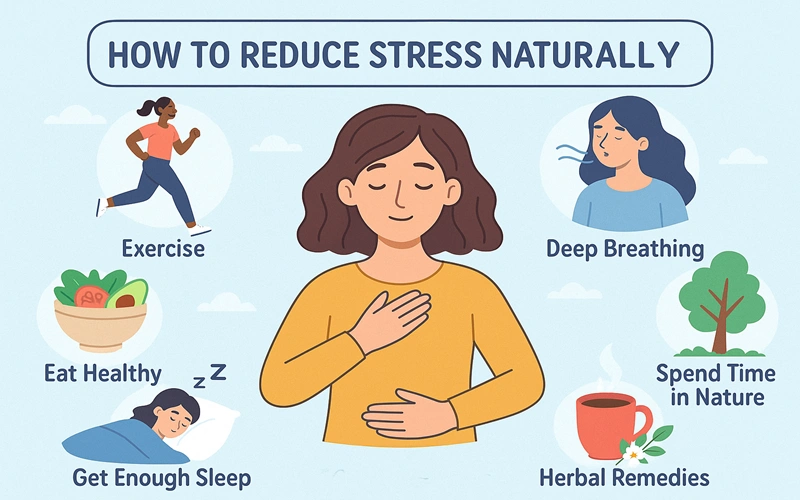
Stress is something everyone feels. Whether it’s homework, job problems, family worries, or just feeling too busy — stress can show up in many ways. But the good news is, you don’t need expensive treatments or strong medicine to feel better. You can learn how to reduce stress naturally with simple, everyday habits. This article will help you understand what stress is, why it happens, and the best ways to calm down and take care of yourself — all without using anything unnatural.
What Is Stress and Why Do We Feel It?
Stress is how your body reacts when it feels pressure. It’s not always bad. Sometimes, stress helps us stay focused and finish tasks. But too much stress — especially over a long time — can make us feel tired, upset, or even sick.
You might feel stress in your:
-
Mind (feeling worried, angry, sad)
-
Body (headaches, stomach aches, fast heartbeat)
-
Behavior (sleep problems, eating too much or too little)
Knowing how to reduce stress naturally can help you live a healthier and happier life.
Read More: wheonx.com
Signs You Might Be Too Stressed
Here are some common signs that stress might be a problem:
-
Trouble sleeping or staying asleep
-
Always feeling tired
-
Feeling nervous or scared a lot
-
Getting angry or upset easily
-
Headaches or muscle pain
-
Forgetting things or having trouble focusing
-
Eating too much or not at all
If you notice these signs often, it’s a good time to learn how to reduce stress naturally before it gets worse.
1. Move Your Body Every Day
Exercise is one of the best ways to reduce stress. You don’t have to run a marathon — even small movements help.
Try these:
-
Take a walk outside
-
Dance to your favorite music
-
Do yoga or stretching at home
-
Ride a bike or play a sport
Exercise helps your brain make “happy chemicals” like endorphins. These make you feel calmer and more positive. Just 20-30 minutes a day can make a big difference.
2. Eat Foods That Help You Feel Good
What you eat affects how you feel. Eating healthy food gives your body energy and helps your brain work better.
Try to:
-
Eat fruits, vegetables, nuts, and whole grains
-
Drink enough water every day
-
Avoid too much sugar, caffeine, or junk food
A balanced diet supports your mood and energy, and it’s a big step when learning how to reduce stress naturally.
3. Get Good Sleep
Sleep is super important for managing stress. When you sleep well, your brain and body rest and repair.
Tips for better sleep:
-
Go to bed and wake up at the same time each day
-
Turn off screens at least 1 hour before bed
-
Keep your bedroom dark, quiet, and cool
-
Avoid eating heavy meals or drinking caffeine before bed
If you sleep well, you’ll think clearer and feel calmer during the day.
4. Practice Deep Breathing and Relaxation
Breathing deeply helps your body relax. It’s fast, easy, and free.
Try this:
-
Sit down and close your eyes.
-
Breathe in slowly through your nose for 4 seconds.
-
Hold your breath for 4 seconds.
-
Breathe out through your mouth for 4 seconds.
-
Repeat this 4-5 times.
This helps calm your nervous system and clears your mind. Learning breathing and mindfulness is a simple part of how to reduce stress naturally.
5. Spend Time in Nature
Nature has a special way of making us feel better. Being outside can lower stress and help you feel more peaceful.
You can:
-
Take a walk in the park
-
Sit near trees or water
-
Go hiking or camping
-
Garden or grow plants
Even a few minutes a day outside can improve your mood.
6. Talk to Someone You Trust
Keeping your feelings inside can make stress worse. Talking to someone — like a friend, parent, teacher, or counselor — can help you feel supported and less alone.
If you’re feeling too stressed, don’t be afraid to say:
“I’m having a hard time, can we talk?”
Feeling heard is a big part of how to reduce stress naturally.
7. Take Breaks from Technology
Too much screen time — especially social media — can increase stress. Your brain needs breaks to relax.
Try this:
-
Turn off your phone for a while each day
-
Spend less time on social media
-
Read a book, draw, or do something offline
Unplugging helps you focus on the real world and feel less overwhelmed.
8. Do Things You Enjoy
Doing fun things isn’t a waste of time — it helps you feel better.
You might:
-
Listen to music
-
Paint, draw, or write
-
Cook something new
-
Play with pets
-
Watch a funny show
Making time for joy is one of the best ways to understand how to reduce stress naturally.
9. Be Kind to Yourself
Sometimes we are our own worst critics. Being kind to yourself can reduce stress and help you feel stronger.
Here’s how:
-
Say kind things to yourself (like “I’m doing my best”)
-
Forgive your mistakes
-
Don’t compare yourself to others
-
Take time to rest
Self-love and kindness go a long way toward calming the mind.
10. Try Simple Herbal Remedies
Some herbs and natural teas can help you relax. You can drink:
-
Chamomile tea (helps with sleep)
-
Lavender tea (calms the mind)
-
Lemon balm (reduces worry)
-
Peppermint (soothes the stomach)
Always check with a trusted adult or doctor before trying new herbs, especially if you take other medicine.
11. Stay Organized and Manage Time
Sometimes stress comes from having too much to do. Planning your day helps you feel more in control.
Tips:
-
Use a to-do list
-
Break big tasks into small steps
-
Take short breaks between tasks
-
Don’t try to do everything at once
Good planning is a smart part of how to reduce stress naturally — it helps your brain feel safe and less rushed.
Final Thoughts
Stress is part of life, but it doesn’t have to control your life. With simple, healthy habits, you can feel better in your mind and body — without needing anything unnatural. Now that you’ve learned how to reduce stress naturally, try adding one or two tips into your daily routine. Over time, you’ll feel calmer, stronger, and more in control of your day.
FAQs About How to Reduce Stress Naturally
Q1. Can kids and teens learn how to reduce stress naturally too?
Yes! Anyone can learn these methods. Moving more, eating well, and talking about feelings work for all ages.
Q2. How fast do natural stress remedies work?
Some, like deep breathing or taking a walk, can help right away. Others, like sleep and eating better, may take a few days or weeks to feel the full effect.
Q3. Do I need to do all the tips to reduce stress?
No. Start with 1 or 2 that feel easy for you. Even small changes can lead to big improvements over time.
Read More: dgmnews.com